








Herbs have been used for basically all of human existence to add flavor and nutrition to our diets. This article sheds some light on the different types of herbs and offers recipes using herbs to create flavorful meals in your kitchen.
Read on for ideas to add flavor to your cooking without extra fat, sugar or sodium.
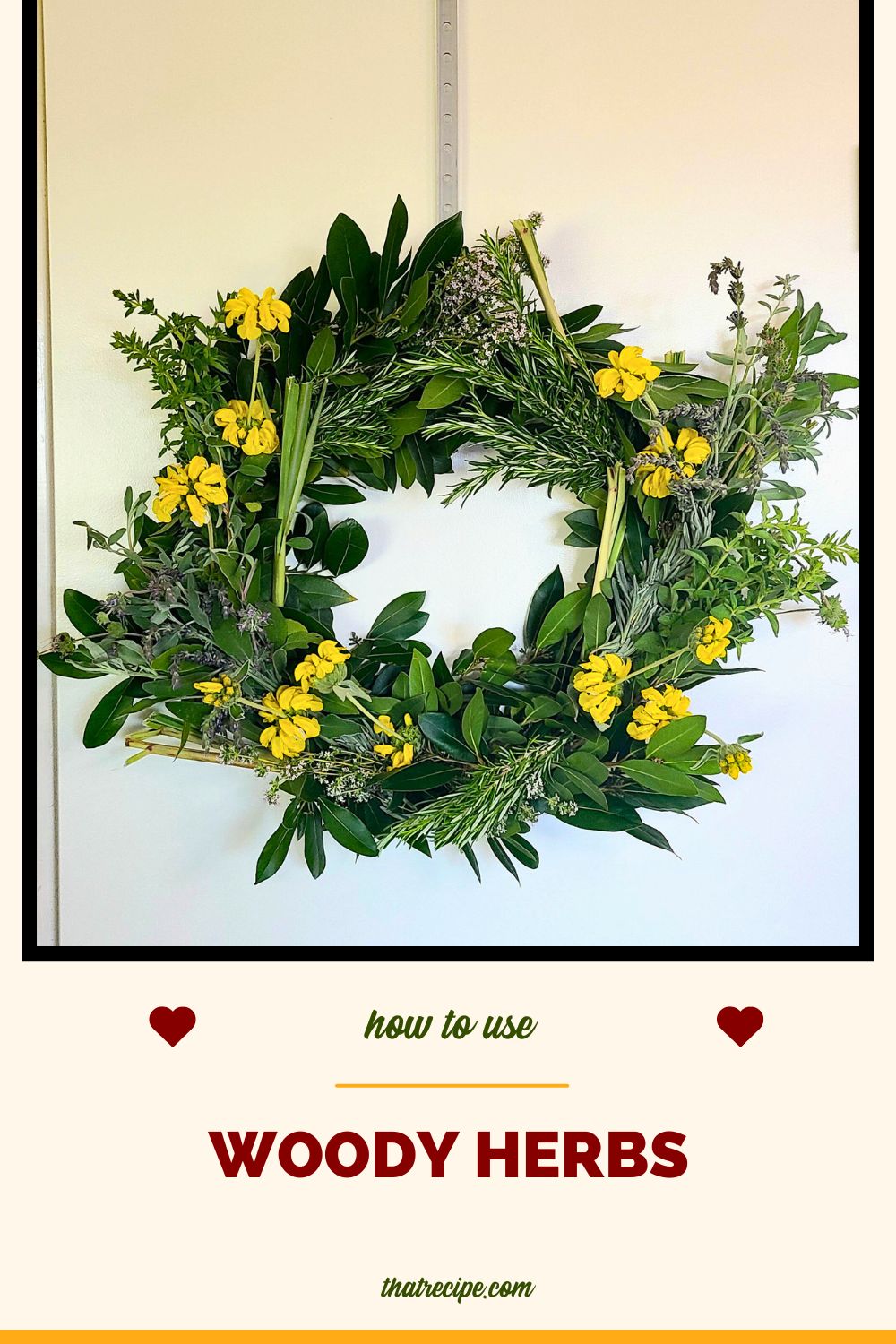
I recently used herbs from my garden to create a wreath for a charity raffle. It smelled AMAZING. I attached a card with a link to this post to give the winner ideas of how to use the herbs instead of just decorating their home.
If you won the wreath, thanks for supporting the Band! I hope you like the wreath.
Woody Herbs versus Soft Herbs
Herbs can be divided into two basic categories, woody and soft. Both add flavor to your recipes but are handled a little differently.
Soft herbs are annual plants (have to be re-replanted ever year). They have soft stems that can be added to the recipe, such as: basil, cilantro, parsley, dill, etc.
Woody herbs are perennial so they have a hardier sometimes woody stem. The leaves are removed from the stem for cooking. The stems can be used to flavor things like broth or simple syrup and then removed before consuming.
Fresh versus Dried Herbs
Drying herbs simply means the water in the leaf has evaporated, which concentrates the flavors so you need less.
To use fresh herbs instead of dried you need a 3 to 1 ratio. If the recipe calls for 1 bay leaf, add 3 fresh; 1 tablespoon dried rosemary leaves becomes 3 tablespoons fresh.
If your dried herbs have been sitting around awhile you may find you need to add more. Or try crushing the herbs in your hands to release the remaining oils increasing the taste.
See this post for drying fresh herbs.
Suggestions for using Woody Herb
This list is in no way inclusive of all woody herbs. It simply covers what I have in my garden and used for the wreath mentioned above.
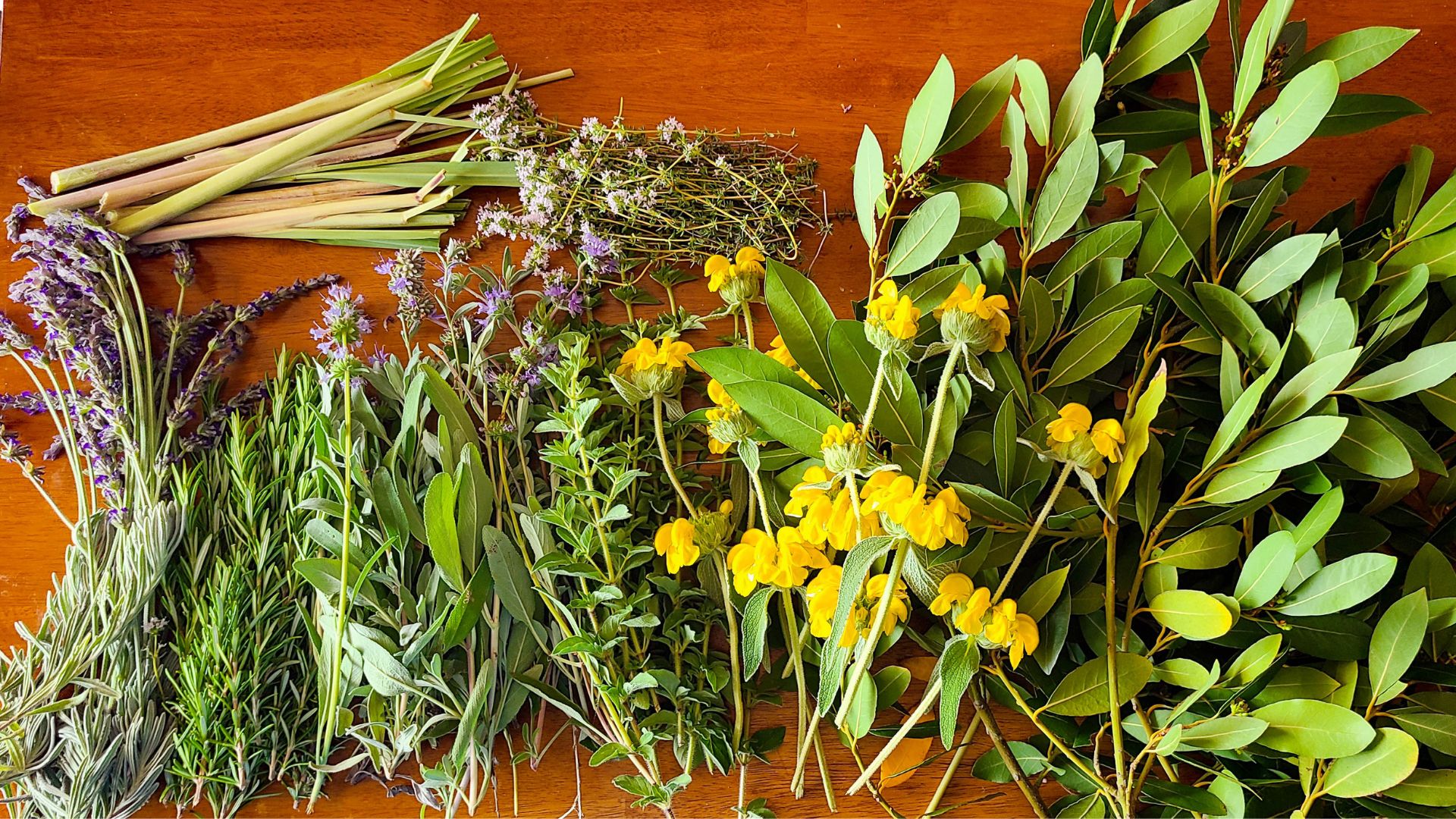
Bottom: lavender, rosemary, sage, oregano, Jerusalem sage, bay leaves
Bay Leaves
Bay leaves add an earthy flavor to beans, stocks and soups. Add a leaf or two before cooking then remove before serving.
I also tie the leaves together in little bundles with kitchen twine, similar to sage sticks (see below) and burn them to get rid of kitchen odors. A few waves of my magic bay leaf wand and my kitchen is fresh smelling again.
Jerusalem Sage
Despite it's name, Jerusalem sage is more closely related to mint than sage. This is the one with the yellow flower in the photo. But, it can be used in recipes that call for either one.
Lavender
Lavender tastes like it smells. It adds a subtle floral flavor to recipes. The French mix it with thyme, basil, rosemary, etc. and add it to everything from eggs to roasted chicken.
I like to use it in desserts.
Besides in the kitchen, lavender stems are wonderful when added to your linen closet or "unmentionables" drawer.
Oregano
There are two types of oregano Italian and Mexican. Mexican is more citrusy while the Mediterranean version tastes minty. If it isn't labeled it is probably Italian. Both can be used interchangeably.
Rosemary
Fresh rosemary has been a staple in my house since childhood. Add it to marinades, sprinkle it on roasts or vegetables, add it to sweets for a subtle contrast and so much more.
- Rosemary Garlic Beef Tenderloin
- Lemon Rosemary Marmalade
- Rosemary Sun Dried Tomato Focaccia
- Garlic and Rosemary Marinated Baby Artichokes
I have also used the rosemary flowers to decorate cakes and petit fours. The lovely pale lavender colored blossoms add a subtle hint of rosemary.
Sage
Sage has a strong distinctive taste that compliments many proteins. Sometimes I will grab some drying sage stems and toss them in the back of my gas grill while I am cooking. Once they catch on fire, I close the lid and let that sage smoke flavor seep in.
Native Americans tie the leaves together in bundles, let them dry and then burn them for ceremonial purposes.
Thyme
Thyme is used in a variety of cuisines, it has a subtle earthy flavor in its tiny little leaves.
- Lemon Thyme Wild Rice Pilaf
- Pan Seared Fish Fillets with Lemon Wine Sauce
- Herb Infused Limoncello
Lemongrass
This one is not a woody herb like the others, since it has no stem. It is a grass a rather tough grass. It is often used in Asian recipes for a citrus like flavor. Try it in sauces or marinades.
If it is fresh, chop it up finely or crush it into a paste with a mortar and pestle and you can add it straight to the recipe. Once dried the flavor is there, but the texture of the dried leaves makes them un pleasant to consume. Remove it like you would bay leaved before serving.
For a delightful herbal tea, chop and add to boiling water, steep for 5 minutes then strain. Enjoy hot or cold.




Leave a Reply